SOCIAL NETWORKS
Contacts

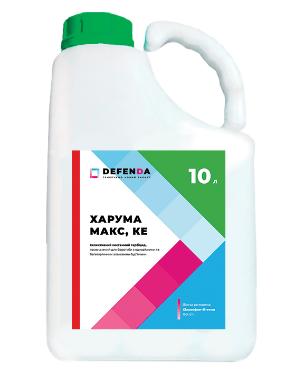
HERBICide DEFENDA HARUMA Max

HARUMA Max
10L
Submit a request
for
rapeseed
HARUMA Max Ρ„ΠΎΡ‚ΠΎ 1 DefendaHARUMA Max Ρ„ΠΎΡ‚ΠΎ 2 Defenda
for
sugar beet
HARUMA Max Ρ„ΠΎΡ‚ΠΎ 3 DefendaHARUMA Max Ρ„ΠΎΡ‚ΠΎ 4 Defenda
for
soybean
HARUMA Max Ρ„ΠΎΡ‚ΠΎ 5 DefendaHARUMA Max Ρ„ΠΎΡ‚ΠΎ 6 Defenda
for
sunflower
HARUMA Max Ρ„ΠΎΡ‚ΠΎ 7 DefendaHARUMA Max Ρ„ΠΎΡ‚ΠΎ 8 Defenda
for
flax
HARUMA Max Ρ„ΠΎΡ‚ΠΎ 9 DefendaHARUMA Max Ρ„ΠΎΡ‚ΠΎ 10 Defenda

A selective post-emergence herbicide for controlling annual and perennial grass weeds in agricultural crops

Advantages

  • No restrictions on subsequent crops.
  • Effective control of a wide range of grass weeds.
  • Rapid uptake of the herbicide under normal conditions (within hours), requiring no repeat spraying.
  • High efficacy in controlling volunteer wheat.

Characteristics

Active ingredient content
quizalofop-P-ethyl, 150 g/l
Chemical group
Aryloxyphenoxypropionic acid derivatives
Formulation
emulsion concentrate
WHO classification
Class II

Recommendations for use

Application features
Spraying is carried out during the active growth phase of the weeds, provided the air temperature is no lower than +15Β°C and soil moisture is optimal, which ensures effective penetration and translocation of the active ingredient within the plant. Spraying should be carried out at early stages of weed growth: 2-3 leaves for annuals and 4-6 leaves for perennials (height about 10-15 cm). At later stages the product application rate should be increased.
Compatibility
Compatible with most products when treating crops a week before or after using a graminicide.
Working solution pH requirements
from 7 to 9
Application precautions
Avoid mixing with other post-emergence herbicides and micro- and macro-fertilizers.
Working solution consumption rate
200-300 l/ha

Mechanism of action

When the product reaches the weed leaves, it quickly penetrates inside the plant tissues and moves to the growing points, roots and rhizomes. By disrupting photosynthesis, the herbicide halts the plant's production of substances essential for life. As a result, the weeds lose their ability to grow, take on a characteristic reddish colour, wilt and die.

Application rates and terms

Crop, object treated
Spectrum of action
Stage
application
Application rates, l/ha
Maximum number of treatments
Crop, object treated
Rapeseed, sugar beet
Spectrum of action
Annual grass weeds
Stage
application
Spraying during the crop's growing season (at the weed 2-4 leaf stage)
Application rates, l/ha
0,4-1,0
Maximum number of treatments
1
Crop, object treated
Rapeseed, sugar beet
Spectrum of action
Perennial grass weeds
Stage
application
Spraying during the crop's growing season (at weed height 10-15 cm
Application rates, l/ha
0,4-1,0
Maximum number of treatments
1
Crop, object treated
Soybean
Spectrum of action
Annual grass weeds
Stage
application
Spraying during the crop's growing season (at the weed 2-4 leaf stage)
Application rates, l/ha
0,4-1,0
Maximum number of treatments
1
Crop, object treated
Soybean
Spectrum of action
Perennial grass weeds
Stage
application
Spraying during the crop's growing season (at weed height 10-15 cm)
Application rates, l/ha
0,4-1,0
Maximum number of treatments
1
Crop, object treated
Sunflower
Spectrum of action
Annual and perennial grass weeds
Stage
application
Spraying crops up to the 8 true leaf stage of the crop
Application rates, l/ha
0,4-1,0
Maximum number of treatments
1
Crop, object treated
Flax
Spectrum of action
Annual and perennial grass weeds
Stage
application
Spraying during the crop's growing season
Application rates, l/ha
0,4-1,0
Maximum number of treatments
1


Reviews

ΠžΠ»Π΅ΠΊΡΠ°Π½Π΄Ρ€

ΠžΡ†Ρ–Π½ΠΊΠ° 5 Π· 5

20.03.2026 13:58

Π·Π»Π°ΠΊΠΎΠ²Ρ– Π½ΠΎΡ€ΠΌ ΠΏΡ€ΠΈΠ³Π½Ρ–Ρ‡ΡƒΡ”. Π³Π°Ρ€Π½ΠΈΠΉ ΠΏΡ€ΠΎΠ΄ΡƒΠΊΡ‚

Related products